Stop Waiting for Rates to Fall Before You Buy Commercial Property
- The Bangko Sentral ng Pilipinas raised its policy rate by 50 basis points to 5.50 percent on 22 October 2026, its fourth hike this year and the highest level since February 2025.
- The trigger is inflation. September came in at 7.2 percent, a three-year high, and economists expect October to print around 7.6 percent when the PSA reports on 5 November.
- The peso closed at a record ₱64.17 to the dollar on 27 October. Anyone earning in dollars, including OFW families and foreign investors, now gets more property for the same money.
- Higher rates hit leveraged buyers first. On a ₱30 million loan, every 1.25 points on the rate adds roughly ₱375,000 a year in interest.
- Office demand is holding up. Net take-up in Metro Manila reached 528,000 square metres in the third quarter against 289,000 square metres of new supply, and very little new space arrives in 2027.
- Waiting for the first rate cut usually means paying more. Sellers reprice the moment cuts look likely, so the best entry is often while rates are still high and buyers are scarce.
Every headline this quarter points the same way. Inflation is at a three-year high, the BSP has raised rates four times since April, and the peso has fallen through 64 to the dollar for the first time. The instinct for most buyers is to sit still until the cycle turns. That instinct is understandable, and for some buyers it is right. For others it is the most expensive decision they will make this year, because the conditions that make headlines grim are the same conditions that bring sellers to the table.
What Actually Happened: The BSP, Inflation and the Peso
Three things moved at once, and each one reaches commercial property through a different door.
The BSP Hiked Harder Than Expected
On 22 October the Monetary Board raised the target reverse repurchase rate by 50 basis points to 5.50 percent. Most analysts had expected 25. It was the fourth straight increase of 2026, following hikes in April, June and August, and it reversed the February cut that had taken the rate down to 4.25 percent. Governor Eli Remolona said the board judged it was falling behind the curve, and the BSP has said it stands ready to act again. The next meeting is on 17 December.
Inflation Is Running Well Above Target
Headline inflation reached 7.2 percent in September, up from 6.1 percent in August, according to the Philippine Statistics Authority. Analysts polled ahead of the October release expect around 7.6 percent, and the BSP’s own range runs from 7.1 to 8.1 percent. That would make October the eighth straight month above the 3 percent target. Fuel and a weak peso are doing much of the work, which is why the BSP is reluctant to cut while the currency is under pressure.
The Peso Broke 64 for the First Time
The peso closed at a record ₱64.17 to the dollar on 27 October before recovering into the 63 range. A weaker peso makes imported construction materials and fuel more expensive, which feeds inflation and fit-out costs. It also changes the arithmetic for anyone whose money starts in dollars, and that part of the story gets far less attention than it deserves.
Common Misconceptions: Why Waiting Is Not Automatically Safe
Three beliefs keep buyers on the sidelines in a cycle like this one. Each holds a piece of truth and misses the larger point.
Myth: High Rates Mean Prices Must Fall
Higher rates cool demand, but commercial property prices in Metro Manila are sticky. Sellers with no debt pressure simply hold, and quality stock rarely appears at distressed prices. What high rates do produce is fewer competing buyers and more room to negotiate on terms: price, payment schedule, fit-out allowances and rent-free periods. That is where the discount shows up, not in the asking price.
Myth: You Should Wait for the First Rate Cut
By the time the BSP cuts, the market has usually priced it in. Buyers who were waiting all return at once, sellers firm up, and the negotiating room you had disappears. If your purchase works at today’s rates, the cut becomes an upside: you can refinance into it later. If it only works after a cut, you are speculating on monetary policy, not buying property.
Myth: A Weak Peso Is Bad for Every Buyer
It is bad for buyers who borrow in pesos and import their fit-out. It is good for buyers who earn in dollars. An OFW family or a foreign investor converting $500,000 receives about ₱32 million at ₱64 to the dollar. Every ₱1 the peso weakens adds roughly ₱500,000 to that budget. Foreign buyers still face the ownership limits in our foreign investor guide, but within those limits the currency is working in their favour right now.
The Financial Impact: Running the Numbers at 5.50 Percent
The policy rate is not the rate you pay. Banks price commercial loans well above it, as our commercial property loan guide explains. What matters is how much the rise since February adds to your cost, and whether the property still covers it.
A Worked Example
Take an office unit priced at ₱50 million that earns ₱3.5 million a year in net operating income, a 7 percent cap rate. You put down 40 percent and borrow ₱30 million. The figures below are illustrative, so ask your bank for its actual quote.
- If the bank’s rate rises by 1.25 points, the same increase the BSP has made since February, first-year interest on ₱30 million rises by about ₱375,000
- At an 8 percent loan rate, interest takes ₱2.4 million of your ₱3.5 million NOI. At 9.25 percent, it takes about ₱2.78 million
- Your cash return on the ₱20 million you put in falls from about 5.5 percent to about 3.6 percent before principal repayments
- Buy the same unit with 60 percent down and the rate rise barely registers
High rates punish leverage, not ownership. The less you borrow, the less this cycle has to do with you.
What It Means for Cap Rates
When borrowing costs rise, buyers demand higher yields, and the only way a yield rises on a fixed income is for the price to soften. Check any asking price against the cap rate method in our valuation guide. A property priced for a 5 percent yield made sense at 4.25 percent. At 5.50 percent and climbing, it needs either a better price or a credible plan to raise the rent.
What This Means If You Lease Instead
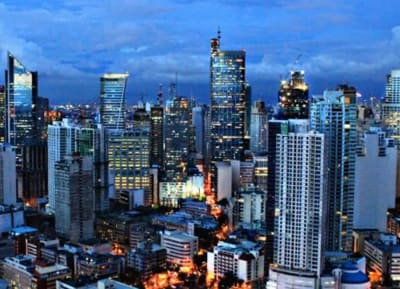
Tenants have more leverage than the headlines suggest. Colliers forecasts Metro Manila office vacancy at around 19 percent for 2026, so landlords with empty floors are still competing for occupiers. At the same time, demand is recovering: Prime Philippines reported 528,000 square metres of net take-up in the third quarter against 289,000 square metres of new supply, with only 154,000 square metres due in the fourth quarter and 149,000 in all of 2027. That window will not stay open forever.
Watch Your Escalation Clause and CUSA
Most leases escalate rent by a fixed percentage each year, so high inflation does not change your base rent directly. It does push up common area and utility charges, which landlords pass through. Before you sign, read our guide to the commercial lease agreement, cap the CUSA increase in writing, and try to lock a longer term at today’s rent while vacancy is still elevated.
Your Next Move: Who Should Act and Who Should Wait
The right answer depends on how you are funding the deal, not on the headlines.
- Act now if you are buying mostly with cash or dollar income. Rates barely affect you, competition is thin, and the currency is in your favour
- Act now if you are a tenant with a lease expiring in the next 12 months. Negotiate a longer term and rent-free months while landlords still have space to fill
- Wait if the deal only works with high leverage. A property that cannot cover its loan at 5.50 percent is not a bargain, whatever the price
- Consider a REIT if you want exposure without the loan. Our REIT guide shows how to start from about ₱5,000
- Whatever you decide, run the due diligence checklist before you pay a deposit
Where This Fits
This guide covers the current rate cycle. For the full picture of what commercial property here costs and earns, start with our commercial real estate guide. Compare markets in Cavite, Laguna and Metro Manila, check current commercial rent rates, and browse commercial property for sale when you are ready to look.
Frequently asked questions
What is the BSP policy rate now?+
The BSP raised its target reverse repurchase rate to 5.50 percent on 22 October 2026, a 50 basis point increase and its fourth hike of the year. The next Monetary Board meeting is on 17 December 2026. Check the BSP’s own announcements for any change after that date.
Will commercial property prices fall because of the rate hikes?+
Prime property rarely falls much in asking price, because owners without debt pressure simply hold. What changes is the negotiation. With fewer buyers able to borrow, you get more room on payment terms, fit-out allowances and rent-free periods. Leveraged sellers who need to exit are where real price discounts appear.
Should I wait for interest rates to go down before buying?+
Only if the deal depends on cheap borrowing. When the BSP starts cutting, waiting buyers return and sellers firm up, so the negotiating room disappears. If the property covers its loan at today’s rates, buying now and refinancing later usually beats waiting.
How does the weak peso affect buying property in the Philippines?+
It helps anyone paying with dollars. At ₱64 to the dollar, $500,000 converts to about ₱32 million, and every ₱1 of peso weakness adds roughly ₱500,000. It hurts buyers who borrow in pesos and import fit-out materials, because the weak peso feeds inflation and construction costs.
Does inflation increase my commercial rent?+
Not directly, if your lease escalates by a fixed percentage each year. It does raise common area, utility and service charges that landlords pass through. Negotiate a cap on those charges in writing, and consider locking a longer term while office vacancy in Metro Manila is still around 19 percent.
Is now a good time to lease office space in Metro Manila?+
For most tenants, yes. Vacancy is still high enough that landlords compete for occupiers, but demand is recovering and very little new supply arrives in 2027. Tenants who negotiate in the next few quarters are likely to get better terms than those who wait for the market to tighten.
Browse verified listings across Metro Manila and beyond.
Browse properties