Stop Believing Flexible Office Space in Manila Is Only for Startups
- Flexible space is not the expensive option for a small team. On a 20-seat requirement it can cost roughly half of a conventional lease in year one, because there is no fit-out to fund.
- Fit-out is the number people forget. At around ₱25,000 per square metre, kitting out 160 square metres runs about ₱4 million before you move a single desk in.
- A conventional lease locks you into three to five years. Flexible space is usually month to month or one year, which is the whole point when your headcount is still moving.
- The seat rate looks high until you unbundle it. It already carries CUSA, electricity, internet, reception, meeting rooms, and cleaning, which are separate line items on a conventional lease.
- The seat rate decides everything. At ₱15,000 per seat a conventional lease never catches up inside ten years on our worked example. At ₱18,000 it wins by year four, and at ₱20,000 by year three.
- Enterprise teams now drive flexible demand here, not freelancers. Project teams, market entry, and swing space during a fit-out are the common uses.
- Ask what happens at renewal before you sign. An operator that reprices you 30 percent at month 13 has undone the saving you signed up for.
You priced an office, saw ₱1,267 per square metre in Makati CBD, multiplied it by your floor area, and decided a conventional lease was the sensible grown-up choice. Then someone quoted you a flexible workspace at ₱15,000 per seat and it sounded like a rip-off. Here is what that comparison misses: the conventional number is not the whole cost, and the flexible number is not just rent. Run both properly for a 20-person team and the answer is not the one most people expect.
What Is Flexible Office Space in Manila? Unpacking the Myths
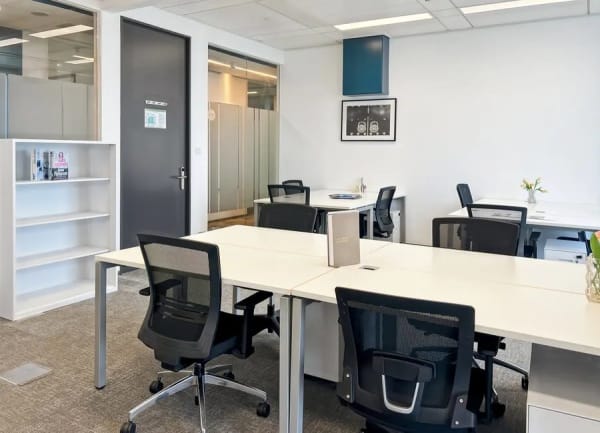
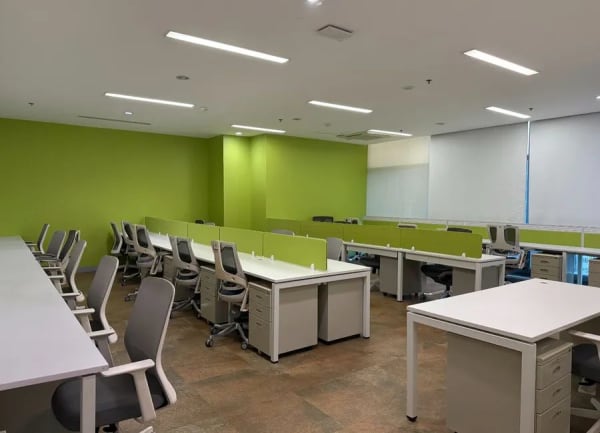
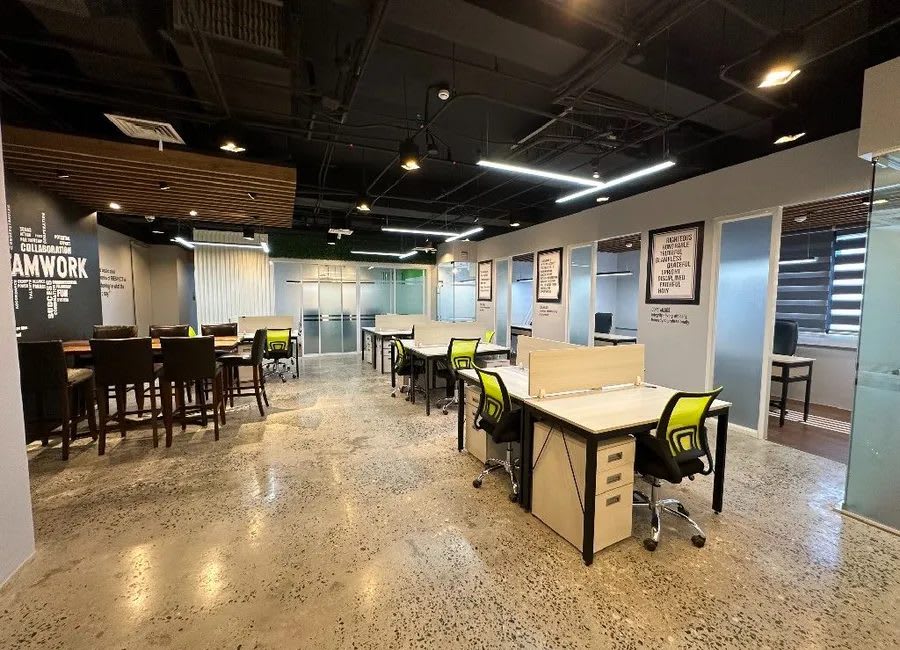
Flexible office space covers coworking floors, serviced offices, and managed suites: fitted, furnished space you take on a short commitment, priced per seat or per suite rather than per square metre. The operator holds the head lease, funds the fit-out, and runs the floor. You bring laptops and people. That is the entire structural difference, and it is where every cost difference comes from.
The Difference Between a Conventional Lease and a Flexible Seat
A conventional lease gives you bare or warm shell for three to five years at a rate per square metre, and everything after that is yours to build and pay for: partitions, cabling, aircon zoning, furniture, internet, a receptionist, cleaning, and the CUSA and VAT that sit on top of the quoted rate. A flexible seat bundles all of it into one monthly figure. You are not comparing two rents. You are comparing a rent against a full occupancy package.
Key Features That Make Flexible Space Stand Out
Three things you cannot buy on a conventional lease at any price: the ability to add or drop seats within a quarter, a move-in date measured in days rather than the three to four months a fit-out takes, and zero capital tied up in an asset you leave behind when you go. If your headcount is certain for five years, none of that is worth paying for. If it is not, all three are.
Common Misconceptions: The Truth Behind Flexible Office Costs
One belief keeps small teams in leases they should not be in: that flexible space is a premium product for people who cannot commit. Three things that gets wrong.
Myth: It Is Only for Freelancers and Startups
That was true a decade ago. It is not what fills these floors now. Corporate teams take flexible space for project squads with a defined end date, for entering a new city before committing to a lease, and as swing space while their own fit-out runs. A 40-person team in a managed suite on a one-year term is an ordinary arrangement here, not an unusual one.
Myth: The Seat Rate Is Just Expensive Rent
Unbundle it before you judge it. A seat rate that looks steep is carrying costs you would otherwise pay separately. Check what your quote actually includes:
- Electricity, aircon beyond building hours, water, and internet with a business SLA
- CUSA, cleaning, security, reception, and pantry consumables
- Meeting room credits, printing, and mail handling, plus what each costs once the credits run out
Myth: You Cannot Get PEZA Space Flexibly
Some operators hold PEZA accredited floors, which matters if your business qualifies for incentives and needs a registered address inside an ecozone. Do not assume it, though. Ask for the specific accreditation and confirm your own registration fits it before you plan around the benefit.
The Financial Impact: What Flexible Office Space in Manila Actually Costs
Take a 20-person team. Our office space calculator puts that at roughly 160 square metres at 8 square metres per seat. Price it in Makati CBD at ₱1,267 per square metre, CUSA at ₱150, VAT at 12 percent, and fit-out at ₱25,000 per square metre:
- Conventional monthly cost lands near ₱253,900 once CUSA and VAT are added, so about ₱3.05 million a year
- Fit-out adds roughly ₱4 million as a one-off, before furniture you might lease separately, and you also need about ₱810,000 in deposit and advance rent to get the keys
- A flexible suite at ₱15,000 per seat runs ₱300,000 a month, so ₱3.6 million a year, with no fit-out and no capital left behind
Year one costs about ₱7.05 million conventionally against ₱3.6 million flexibly. The gap is not the rent. It is the ₱4 million fit-out nobody puts in the comparison.
Where the Crossover Sits, and Why It Surprises People
The obvious answer is that the lease eventually wins because the fit-out is spent once. Run it and the obvious answer is wrong more often than not. Carrying a 5 percent annual escalation on the lease against a flat seat rate, the crossover depends almost entirely on what you pay per seat:
- At ₱15,000 per seat, the conventional lease never catches up inside ten years, because the monthly gap is only about ₱46,000 while the fit-out is ₱4 million
- At ₱18,000 per seat, the lease pulls ahead in year four
- At ₱20,000 per seat, the lease pulls ahead in year three
What That Means for Your Decision
Your seat rate is the whole decision, not your time horizon. Negotiate the seat rate down and flexible space stays cheaper for longer than anyone assumes. Accept a premium rate and the lease overtakes it quickly. Get a real quote before you assume either way, because a ₱3,000 difference per seat moves the crossover by three years.
Your Next Move
Three things before you sign either one:
- Write down how confident you are in your headcount 36 months out, because that number decides this more than any rate does
- Ask every flexible operator for the all-in seat rate, what the meeting room credits cover, and the renewal rate for year two in writing
- Get one conventional quote with the fit-out costed by a contractor, not estimated, so you are comparing real numbers against real numbers
Choosing Flexible Office Space in Manila: What You Need to Know
Say the flexible route fits your horizon. The remaining risk moves from capital to contract, and the terms vary far more between operators than lease terms do between landlords.
Get the Right People Involved
Have someone read the membership agreement properly, because it is a licence to occupy rather than a lease and the protections differ. A lawyer will tell you what notice you owe to exit, what happens to your deposit, and whether the operator can move you to a different floor or building. A tenant representation broker knows what comparable teams pay in that same centre, which is the only way to know whether your quote is fair. Both cost less than one bad year.
Red Flags to Watch For
- A headline seat rate that excludes electricity or after-hours aircon and bills them later
- No stated renewal rate, or a renewal left entirely to the operator’s discretion
- Meeting room credits that expire monthly and cost heavily once used up
- A long notice period to exit that quietly turns a monthly deal into an annual one
- An operator whose own head lease is close to expiry, since your term cannot outlive theirs
Before You Commit
- Visit at 10am on a weekday, not on a scheduled tour, and see how loud and how full the floor actually is
- Test the internet yourself and ask for the SLA and the backup connection in writing
- Confirm the building has full backup power and what happens to your floor during an outage
- Check the operator’s head lease expiry and whether your agreement survives a change of operator
- Diarise your renewal window three months out so you renegotiate from choice rather than urgency
Where This Fits
If you decide a conventional lease is right after all, read our guide to what the lease agreement actually contains before you sign, and the Makati, BGC and Ortigas comparison to choose the district. The VAT and withholding treatment differs between a lease and a service agreement, so confirm it with your accountant. All of it sits under our commercial real estate guide, and current availability is on our office space for lease page. For wider market context, JLL Philippines publishes quarterly office data.
Frequently asked questions
How much does flexible office space cost in Manila?+
Expect a per-seat monthly rate in the prime districts, quoted all-in rather than per square metre. On a 20-seat requirement at ₱15,000 per seat you are at ₱300,000 a month, or ₱3.6 million a year, with no fit-out to fund. Ask every operator to confirm in writing what the rate includes before you compare two quotes.
Is coworking cheaper than leasing an office in the Philippines?+
More often than people expect, yes. Kitting out 160 square metres at ₱25,000 per square metre is about ₱4 million spent before you occupy, and that gap takes years to recover. At ₱15,000 per seat for 20 seats, our worked example never sees the conventional lease catch up inside ten years. At ₱20,000 per seat it catches up in year three.
What is the difference between coworking and a serviced office?+
Coworking sells you a desk on a shared floor, either a hot desk or a fixed one. A serviced or managed office gives your team its own enclosed suite with a lockable door, still fitted and still bundled. The suite costs more per seat and is what most teams above about eight people take.
Can a company take flexible office space, or is it only for individuals?+
Companies are the larger part of the market now. Corporate teams use it for project squads with an end date, for entering a new city before committing, and as swing space during their own fit-out. Operators handle registered business addresses and multi-seat suites as a matter of course.
What is not included in a flexible office seat rate?+
It varies by operator, which is exactly why you ask. Common exclusions are after-hours aircon, electricity above a stated cap, meeting room hours beyond your credits, printing above an allowance, and dedicated storage. Get the exclusions listed in the agreement, not described in a tour.
How long is a typical flexible office term in Manila?+
Month to month up to one year is standard, against three to five years for a conventional lease. The short term is the product you are paying for, so check the notice period you owe to exit. A three-month notice on a monthly agreement is not really a monthly agreement.
Can I get PEZA accreditation in a flexible office?+
Sometimes. Some operators hold PEZA accredited floors, which matters if your business qualifies for incentives and needs a registered ecozone address. Never assume it from a general claim. Ask for the specific accreditation covering the floor you would occupy and confirm your own registration fits it.
When should I move from flexible space to a conventional lease?+
When your headcount stops moving and your seat rate is high enough that the lease overtakes it inside your horizon. On our worked example that happens in year three at ₱20,000 per seat and never inside ten years at ₱15,000. Run both with a real contractor quote for the fit-out rather than an estimate, and decide on the arithmetic instead of the instinct.
Browse verified listings across Metro Manila and beyond.
Browse properties