
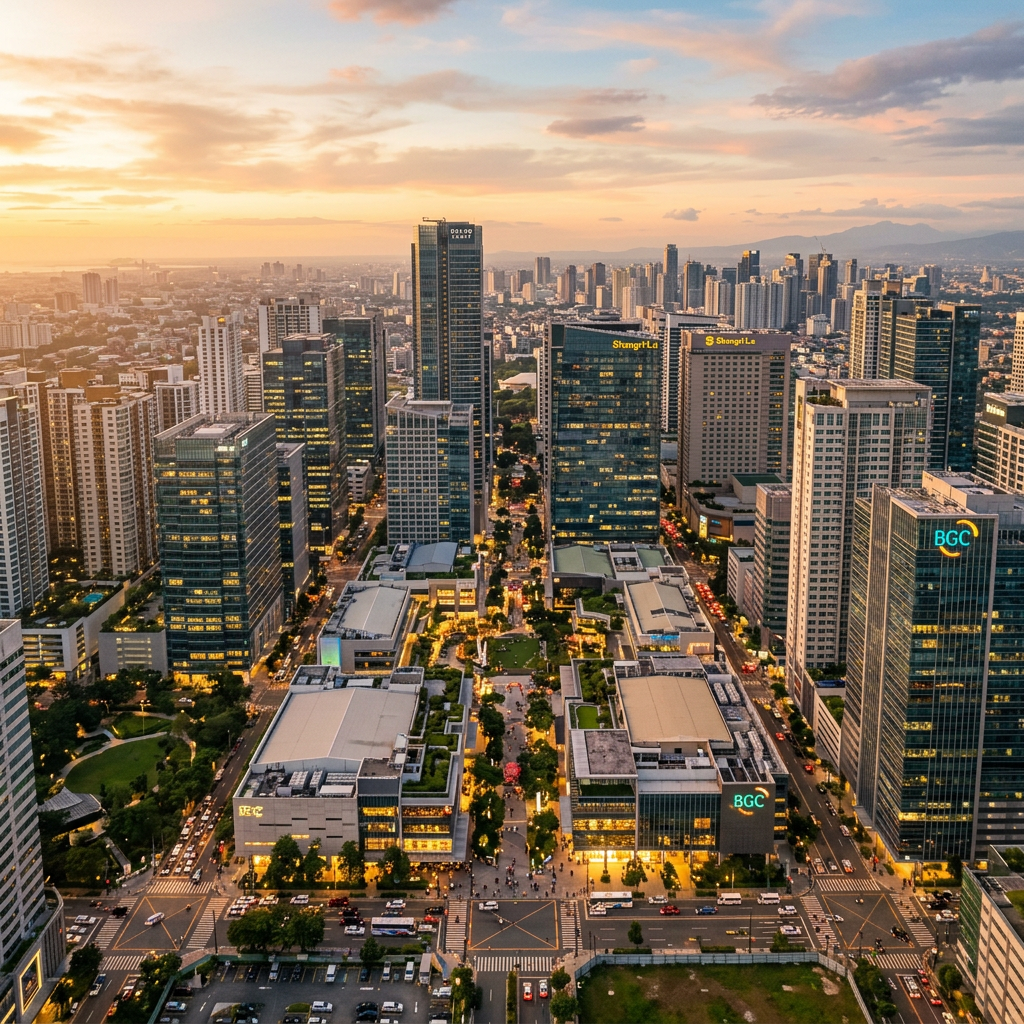
The case for owning commercial properties in the Philippines has never been stronger. With a GDP that grew 5.6% in 2024, a BPO industry generating over 2 billion in annual revenues, and a consumer class expanding faster than available retail space, the fundamentals point clearly in one direction — demand for quality commercial space is outpacing supply. Commercia exists to connect investors with that opportunity before the window narrows further.
This is not speculation. It is a market backed by data, driven by demographics, and supported by infrastructure spending that is reshaping the economic geography of the entire country.
Why Are Commercial Properties in the Philippines Outperforming Other Asset Classes?
Commercial properties in the Philippines deliver rental yields of 6% to 10% annually — nearly double what residential properties typically generate — while offering the additional upside of capital appreciation as urban land values rise. The combination of income and appreciation in a single asset is what separates commercial real estate from most other investment vehicles available to Filipino and foreign investors.
The stock market offers liquidity but no physical collateral. Mutual funds offer diversification but no direct control. A well-located commercial property gives you a tenant paying rent every month, a land title in your name, and an asset that historically holds value even through economic slowdowns.
For investors with a 5 to 10 year horizon, commercial properties for sale and lease in the Philippines represent one of the most reliable paths to compounding wealth in the country today.
What Types of Commercial Properties Generate the Best Returns in the Philippines?
The highest-performing commercial properties in the Philippines tend to fall into three categories: retail units in high-footfall corridors, office spaces in established business districts, and mixed-use developments that generate income from multiple tenant types simultaneously. Each comes with a distinct risk-return profile, and the right choice depends on your capital, timeline, and appetite for active management.
Retail units in ground-floor commercial strips — particularly in growing cities like Cebu, Davao, Clark, and Iloilo — are attracting strong interest because land costs remain lower than Metro Manila while foot traffic is rising with population growth. A retail unit in a well-positioned strip mall can generate gross yields north of 8% with relatively low vacancy risk.
Office spaces in BGC, Ortigas, and Makati remain the blue-chip end of the market. Tenants are corporate, leases are long, and rental income is predictable. These properties cost more to acquire but carry the lowest operational risk of any commercial property type in the country.
Mixed-use developments are the fastest-growing segment. Investors in Commercia-listed mixed-use properties benefit from diversified income streams — retail on the ground floor, offices above, and in some cases residential components that smooth out vacancy cycles. You can browse mixed-use and commercial listings by location to compare options across the country.
How Does the Philippine Government Support Commercial Property Investment?
The Philippine government has directly supported commercial property investment through the Build Better More infrastructure program, economic zone expansions under PEZA, and REIT legislation that has brought institutional capital into the commercial real estate market — validating its long-term fundamentals. These are not marginal policy decisions. They represent a structural commitment to making the Philippines a destination for commercial capital.
PEZA-registered economic zones reduce tax exposure for businesses operating within them, which in turn increases demand for commercial space inside and adjacent to those zones. Investors who acquire commercial properties near PEZA zones benefit from a captive pool of corporate tenants with stable, long-term space requirements.
The REIT law, which took full effect in 2020, has also had an indirect benefit for direct commercial property investors — it brought international attention and pricing benchmarks to the Philippine commercial real estate market, making valuations more transparent and exits more predictable.
Is It Safe for Foreigners to Invest in Commercial Properties in the Philippines?
Yes — foreign nationals can legally own commercial condominium units in the Philippines under the Condominium Act, subject to the 40% foreign ownership cap per project, and can also invest through a Philippine corporation or long-term leasehold arrangements of up to 50 years. The legal framework is clear, well-established, and actively used by foreign investors from Japan, South Korea, the US, and across the European Union.
For foreign investors, Commercia is particularly valuable as a starting point. Rather than navigating broker networks blind, foreign investors can search commercial properties by city and budget before engaging any agent or developer directly.
FAQ
What is the best city in the Philippines to buy commercial property?
Metro Manila — specifically BGC, Makati, and Ortigas — remains the safest bet for capital preservation and corporate tenants. For higher yields, secondary cities like Cebu, Davao, and Clark offer lower acquisition costs with rising demand driven by infrastructure development and population growth.
How much do commercial properties in the Philippines cost?
Prices range from under ₱2 million for small provincial commercial units to ₱50 million and above for prime Metro Manila office or retail spaces. The right entry point depends on your yield target, location preference, and whether you’re buying for income, appreciation, or both.
Can I finance the purchase of a commercial property in the Philippines?
Yes. Major Philippine banks including BDO, BPI, and Metrobank offer commercial real estate loans with terms typically ranging from 5 to 20 years. Loan-to-value ratios generally reach up to 60% to 70% for commercial properties, depending on the borrower’s profile and the asset being financed.
How long does it take to find a tenant for a commercial property in the Philippines?
Vacancy periods vary by location and property type. Well-located retail units in high-traffic areas are often pre-leased before construction completes. Office spaces in established CBDs typically see vacancy periods of 1 to 3 months between tenants. Properties listed on Commercia are visible to an active investor and tenant audience, reducing time-to-lease.
What documents do I need to buy commercial property in the Philippines?
For Filipino buyers: two government-issued IDs, TIN, and proof of funds. For foreign buyers: passport, proof of funds, and documentation of the corporate or condominium ownership structure being used. A licensed broker and real estate lawyer are strongly recommended for any transaction above ₱5 million.
What is the difference between commercial and industrial property in the Philippines?
Commercial properties are used for retail, office, and service-oriented businesses in urban and mixed-use settings. Industrial properties — warehouses, factories, logistics hubs — are typically located in economic zones or on the urban fringe. Both generate rental income, but industrial properties tend to have lower per-sqm prices and higher net yields due to simpler fit-out requirements.

Join The Discussion